

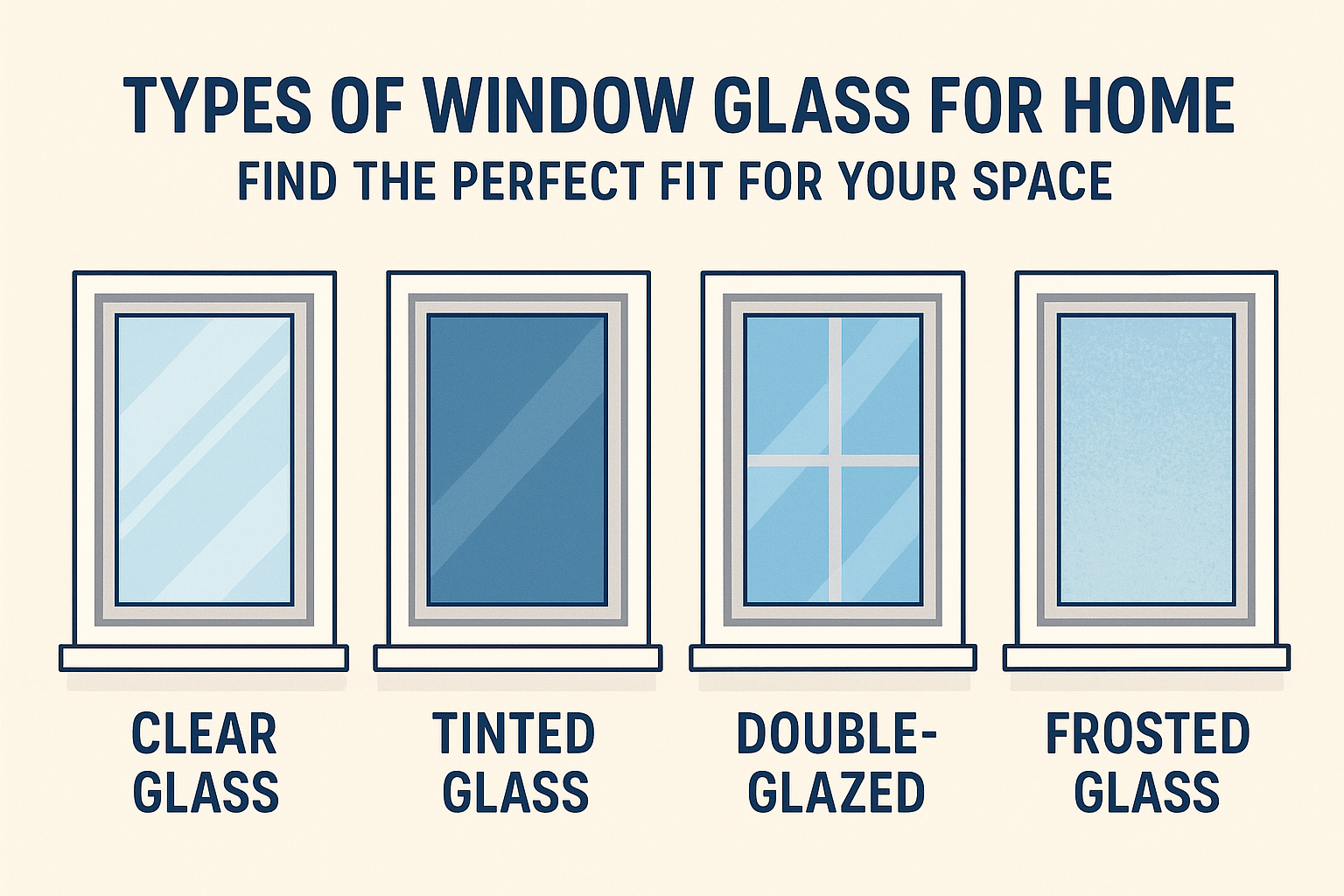
When planning for home improvements or building a new house, selecting the right house window glass is more than just about letting light in. The right glass impacts energy efficiency, safety, comfort, aesthetics, and long-term costs. In this guide, we’ll walk you through types of window glass for home, what makes one glass better than another, and how to decide which glass is best for windows in your house.
Why Choosing the Best Glass for Windows Matters
Before diving into options, it helps to understand why the glass type you choose is important.
- Energy efficiency: Proper glazing reduces heat loss in winter and heat gain in summer.
- Safety & security: Some glasses are stronger or safer in case of breakage.
- Comfort & noise control: Quality glass can reduce outside noise and control glare.
- Aesthetic & privacy: Some glass enhances the look of a room, others give privacy.
- Cost & maintenance: Better glass may cost more initially but saves on bills and upkeep.
Key Factors to Consider When Choosing Glass for Windows
When deciding which glass is best for windows, here are key criteria you should evaluate:
- Climate & Solar Exposure
If you live in a region with hot summers and strong sun, glass that cuts solar heat gain will be beneficial. In cooler climates, insulating qualities matter more. - Thermal Insulation (Glazing & Coatings)
Multiple glazing layers (double pane, triple pane) or gas fills (argon, krypton) between panes help improve insulation. Coatings like Low-E reflect unwanted heat. - Safety & Strength
If windows are large, low to the floor, or in risky spots, safety glass like tempered/toughened glass or laminated glass is preferable. - Privacy & Light Control
Some rooms require privacy—bathrooms, bedrooms, street-facing walls. Frosted, obscured, tinted, or reflective glass can help. Also, tinted or reflective glass helps reduce glare. - Sound Control
If you’re in a busy area with traffic or noisy neighbors, choosing insulated glass units or laminated glass with sound-dampening qualities helps. - Aesthetic & Architectural Style
The type of glass should complement your home’s design. Clear glass for modern minimal-look; stained, decorative, or textured glass for classic or artistic touches. - Budget vs Long-Term Value
Higher performance glass (insulated, coated, safety glass) costs more up front but often pays off via energy savings, lower maintenance, and longer lifespan.
Common Types of Window Glass for Home
Here are some of the best window glass for home settings, with pros and cons to help you decide:
Which Glass Is Best for Windows in Different Scenarios
Here are some practical combinations of what to use where in a home, to get the best balance of performance and cost.
| Scenario | Recommended Glass Features |
| Living Room with large windows, lots of sun exposure | Double pane IGU + Low-E coating + maybe reflective or tinted glass to prevent overheating; consider safety tempered glass if windows are reachable. |
| Bedrooms & quieter rooms | Laminated glass for sound reduction; tempered glass for safety; clear or lightly tinted glass depending on external view. |
| Bathrooms & Ensuite | Frosted or obscured glass for privacy; tempered safety glass; double or insulated if budget permits. |
| Kitchens & utility areas | Clear or tinted glass easy to clean; IGU for thermal control; tempered glass where splash or heat exposure is likely. |
| Street-facing windows | Reflective or tinted to enhance privacy; laminated or tempered for safety; possibly Low-E to reduce glare and UV. |
Cost and Maintenance Considerations
- Upfront vs Long-Term Cost: More advanced glass types cost more initially (e.g., laminated, tempered, multi-pane, coatings), but reduce energy bills and need less replacement.
- Frame Compatibility: Heavier glass (laminated, triple-pane) requires stronger frame supports.
- Cleaning & Care: Some glass types (e.g., textured, decorative) may require more maintenance. Clear and reflective are easier.
- Warranty & Certifications: Check if the glass meets safety standards/regulations in your region, has UV protection, etc.
- Energy Savings: Over time, better-insulated glass means lower heating/cooling costs.
Steps to Choose the Right House Window Glass
- Assess your climate and how much sun each window gets.
- Decide which priorities matter most: safety, privacy, insulation, aesthetic.
- Check your budget and frame structure.
- Look for trusted brands/suppliers with appropriate safety and energy efficiency certifications.
- Where possible, view samples or mock-ups to see light, color, and transparency in real conditions.
- Factor in long-term costs: energy bills, maintenance, possible replacements.
Conclusion
Choosing the best glass for windows in your home means balancing many factors—energy efficiency, safety, privacy, aesthetics, and cost. By understanding the types of window glass for home—such as tempered, laminated, Low-E, insulated, or tinted—you can make an informed choice about which glass is best for windows in each room. The “house window glass” you pick today will affect your comfort, bills, and home value for many years to come.
No Comments.